Computational Thinking
Computational Thinking is a cognitive approach that uses the fundamental principles of programming to solve wide range of problems, extending far beyond the realm of computers.

Teaching Framework

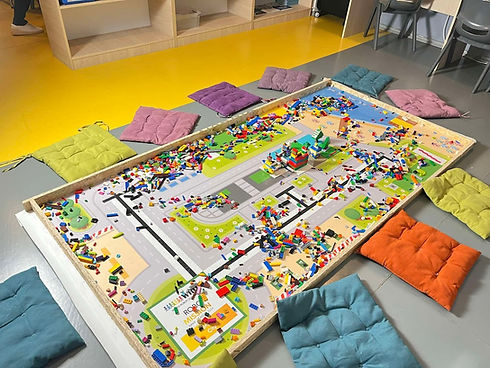
Computational thinking is introduced in Grade 2 and continues through Grade 6 at Millennium School. Throughout this period, students develop problem-solving strategies, including learning how to formulate solutions in a way that computers can understand by writing algorithms.
Students are also introduced to the fundamentals of data science, which include defining research questions, collecting and processing data and analyzing results. They use interactive simulations as part of their cognitive process and develop skills in logical reasoning, abstraction and data modeling.
Additionally, students cultivate vital socio-emotional skills such as perseverance in the face of academic challenges — approaching complex tasks with confidence, cooperating with team members and reflecting on their work.
Problem-Solving Steps
-
Identifying and analyzing the core problem;
-
Decomposing the problem by breaking it down.
Recognizing patterns and generalizing them;
-
Abstraction and modeling;
-
Designing an algorithmic solution;
-
Testing and debugging the algorithm;
-
Evaluating the outcome and decision evaluation.
Connection with Programming

Computational thinking and computer programming share foundational concepts, however, they still differ:
-
Computational thinking applies these logical principles much more broadly across various disciplines than coding does.
-
Computational thinking combines thought processes rather than strictly requiring coding skills, whereas programming explicitly demands those technical skills.


